
Contact Us for More ISUZU C240 Engine Parts!
Summary
Here are Our YouTube videos!
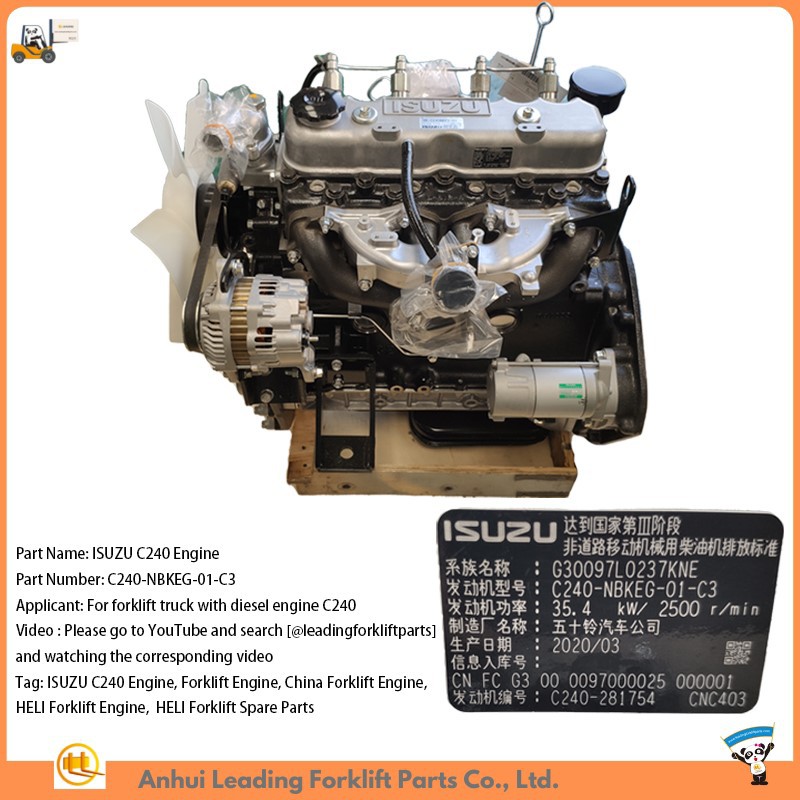
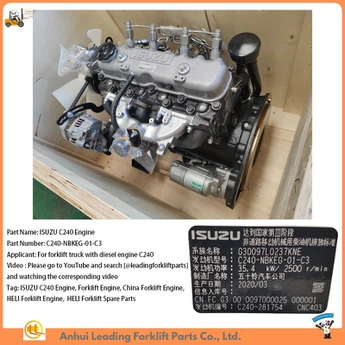
When it comes to powering forklifts, especially for industrial applications, the Isuzu C240 engine emerges as a top contender. But what exactly makes this engine the best choice for HELI 3T forklifts? The answer lies in its robust design, reliable performance, and advanced technology that cater specifically to the needs of HELI forklifts.
Specifications of the Isuzu C240 Engine
| Parameters | Specification |
|
Displacement |
2.369L |
|
Number of Cylinders |
4 |
|
Bore x Stroke |
86mm x 102mm |
|
Intake Method |
Naturally Aspirated |
|
Injection Method |
Non-Direct Injection |
|
Fuel Type |
Diesel |
|
Net Weight |
252kg |
|
Emission Standard |
National III |
|
Maximum Power Output |
35.4KW (2500r/min) |
|
Maximum Torque |
320Nm (1800r/min) |
|
Dimensions |
693mm x 551mm x 689mm |
Technical Advantages
VGS Variable Geometry Turbocharging Technology
The Forklift Isuzu C240 Engine features VGS technology, enabling it to deliver a maximum torque of 320Nm at just 1800 RPM. This is crucial for maintaining strong traction and lifting capabilities in forklifts, especially in low-speed conditions that involve frequent starting, climbing, and load-handling operations.
Ddi Supercharged Common Rail Technology
With an injection pressure of up to 180 MPa, this technology ensures excellent fuel atomization and complete combustion. Compared to gasoline engines of similar displacement, the Isuzu C240 engine reduces fuel consumption by 20%-30%. For users, this translates into significant operational cost savings.

Performance Advantages
High Fuel Efficiency
The Isuzu C240 Diesel Engine is renowned for its high-quality components and rigorous manufacturing processes, ensuring long-term reliability and durability. This makes it ideal for continuous and prolonged operation, particularly important in warehouse and logistics industries where efficiency is key.
01
Environmental Compliance and Friendliness
The Isuzu C240 engine meets China's Stage III emission standards, utilizing advanced emission control technologies to reduce pollutants. It's environmentally friendly and compliant with global market regulations, making it adaptable to different regions.
02
High Reliability and Durability
The Isuzu forklift engine is built with premium parts and adheres to strict manufacturing standards, ensuring its durability in demanding environments. This reduces maintenance needs and minimizes downtime, which is vital for forklift operations in harsh conditions.
03
Lightweight and Compact Design
Despite its compact and lightweight design, the C240 engine delivers a maximum power output of 35.4KW. This design allows forklifts to remain powerful yet more maneuverable and space-efficient.
04
Wide Application
The Isuzu C240 engine is not only suitable for Heli 1-3T internal combustion forklifts but is also widely used in other industrial equipment, proving its adaptability and stability across various challenging conditions.
05
Maintaining the optimal performance of your Isuzu forklift engine requires access to high-quality parts. So, where can you find reliable Isuzu C240 engine parts? Our company offers a comprehensive selection of genuine parts, ensuring that you have everything you need to keep your engine running smoothly. With our extensive inventory and prompt delivery, you can count on us to provide the parts you need when you need them.
We offer a parts manual for the Isuzu C240 engine, as well as catalogs for some of our products. Be sure to download them now!
Early Wear Symptoms

Significant Power Decline
The engine's power performance is noticeably reduced.
Cold Start Difficulty
The engine struggles to start, especially in cold conditions.
Severe Crankcase Blow-by
Excessive blow-by gases escape through the crankcase breather.
Black Smoke from Exhaust
The exhaust emits black smoke during high-load operations.
Signs of C240 Engine Wear
Severe Piston Ring Wear
The piston rings show significant wear, with the gap of the compression ring typically reaching the limit of 2mm.
Cylinder Liner Wear
A ridge forms at the top dead center, with wear exceeding the maximum clearance. External discoloration and internal deterioration of the chrome plating, along with signs of dry friction due to oil depletion, are evident.
Reasons For C240 Engine Wear
Improper Break-in Procedures
Failure to adhere to the manufacturer's break-in and usage guidelines during the initial operation of the new engine.
Frequent Starts
Especially in Cold Conditions, sudden load increase after starting in low temperatures leads to premature mechanical wear.
Improper Maintenance and Usage
Inadequate maintenance and incorrect usage practices contribute to accelerated engine wear.
5. How to Prevent Early Wear in the Isuzu C240 Engine?
- Follow Proper Break-in Procedures: The engine should undergo inspection and break-in before shipment, and further break-in is required after installation. For the C240 diesel engine in Heli forklifts, the break-in period is 50-100 hours. This phase improves the quality of friction surfaces.
-
Manage Initial Wear: During the break-in period, components have rough surfaces and experience quicker engagement wear. Detached metal or oxides can cause significant abrasive wear. To mitigate this, adhere to speed and load limits, change the oil, and maintain optimal operating temperatures (coolant temperature at 80-90°C) and normal oil pressure. Avoid sudden acceleration to reduce early wear and extend part life.
Adhere to Correct Operating Procedures: Always preheat the engine, start slowly, idle to warm up, and begin operation at low speeds. Maintain normal operating temperatures and moderate speeds.
- Air Filter: The air filter significantly impacts engine longevity. Poor filtration efficiency or defective seals can allow dust into the cylinders, accelerating wear on components like cylinder liners and piston rings. In heavily polluted environments, use a composite air filter.
- Oil Filter: Regular maintenance of the oil filter is crucial. For forklifts operating in harsh conditions, change the oil and clean or replace the oil filter every 2-3 months or after approximately 150 hours of operation.
- Choose the Right Oil: Select lubricants with slightly higher viscosity or those less affected by temperature variations to handle frequent starts and high-load conditions effectively.
- Follow the Manufacturer's Recommendations: Use lubricants that meet the manufacturer's specifications. In cases of frequent cold starts or significant load variations, opt for high-grade lubricants.